How to Choose a Daycare in Klein, Houston: 15 Questions to Ask During a Tour
A practical, pressure-free checklist for comparing safety, teachers, routines, communication, and the everyday feel of a childcare center.
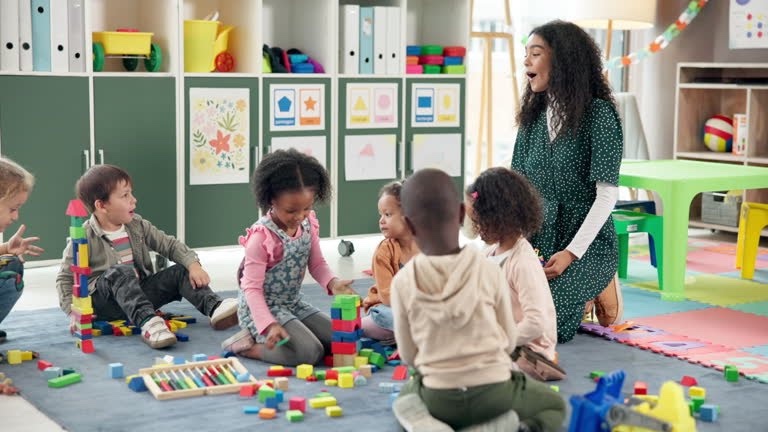
Start With Your Family's Real Needs
Choosing childcare is both a practical decision and a trust decision. A center can look polished online and still be the wrong fit for your child's temperament, your workday, or the kind of communication you expect. Before touring, write down the non-negotiables that will shape your family's daily life: location, hours, age group, schedule, budget, meals, transportation, and how quickly you need care.
For families around Klein, Champions, Spring, and northwest Houston, commute patterns matter. A center close to home may be easier for shared drop-offs, while a location near work may shorten the time between an unexpected call and your arrival. Think through who will usually handle mornings, who can pick up before closing, and what happens when plans change.
- Which days and hours do we need care?
- How far can we reasonably drive during rush hour?
- Does our child need infant care, toddler care, Pre-K, or school-age support?
- How do we prefer to receive updates during the day?
- What kind of classroom environment helps our child feel comfortable?
Questions About Safety and Supervision
A tour is your chance to move beyond broad promises and understand how safety works in ordinary moments. Ask how families enter the building, how authorized pickup is verified, how classrooms transition to outdoor areas, and how teachers account for children throughout the day. The strongest answers describe a repeatable process rather than relying on a single feature or slogan.
Parents should also ask how the center handles illness, medication, allergies, emergencies, and incident communication. For infants, ask to see the sleep space and hear the center's safe-sleep practices. For mobile children, notice whether teachers can see the full room and whether materials are appropriate for the age group using them.
- 1. How is building access controlled and pickup authorization verified?
- 2. How are children counted during classroom and playground transitions?
- 3. What training do teachers complete for emergencies, first aid, and safe sleep?
- 4. How are allergies, medication, illness, and incidents documented?
- 5. What is the teacher-to-child ratio in my child's classroom throughout the day?
Questions About Teachers, Routines, and Learning
The quality of a child's experience is shaped by daily interactions. Watch whether teachers get down to children's eye level, use warm language, redirect calmly, and help children participate rather than simply managing the room. Ask how new teachers are supported and how the center maintains consistency when a regular teacher is absent.
A good curriculum should be visible in the room without making early childhood feel like a worksheet marathon. Look for books, open-ended art, blocks, sensory materials, pretend play, music, movement, and outdoor time. The schedule should provide a dependable rhythm while leaving room for individual needs, especially for infants and younger toddlers.
- 6. What qualifications and ongoing training do classroom teachers receive?
- 7. How do teachers help a child who is upset or having a difficult transition?
- 8. What does a typical day look like for this age group?
- 9. How does play connect to language, math, social, and motor development?
- 10. How do teachers adapt activities for different interests and developmental stages?
Questions About Family Communication
Parents should not have to guess how their child ate, slept, felt, or participated. Ask what information is shared daily, how quickly teachers or administrators respond, and whether families can message the center through a secure app. Daily reports are especially useful when they capture meaningful details rather than only checking boxes.
Partnership also matters when a child is working on a new skill. Potty learning, feeding changes, separation anxiety, behavior, and school readiness are easier when home and school use consistent language and expectations. Ask how the center starts those conversations and how families can share what is working at home.
- 11. What updates will we receive about meals, naps, activities, and mood?
- 12. What communication channels can families use for routine questions and updates?
- 13. How are developmental milestones or concerns discussed?
- 14. How does the center partner with families on routines such as potty learning?
- 15. Who should a parent contact when a question needs administrative support?
Trust What You Observe
After the tour, write down what you noticed before the details blur together. Were children engaged? Did teachers seem present? Did the center smell and feel clean without appearing sterile? Were questions welcomed? Could you picture your child being comforted there on a hard morning as clearly as you could picture them enjoying a good day?
No childcare setting will remove every worry from a parent. The goal is to find a center whose practices are clear, whose communication is open, and whose approach matches what your child needs now. Comparing centers with the same questions makes the decision more grounded and gives you a better starting point for partnership after enrollment.
Bring this list to your next tour and take notes. The best choice is the center that can explain how its values show up in the daily experience of children and families.
Helpful resources
See learning and care in action
Visit First Achievers Childcare at 4540 Farm to Market 1960 Rd W in Houston and find the right classroom for your family.
Keep reading
All articles
Daycare vs. Preschool vs. Pre-K in Texas: What's the Difference?
The labels overlap, but schedules, ages, eligibility, and family needs can differ. Here is how to compare the actual experience behind the name.
Read article
Infant Daycare in Houston: A Parent's Guide to Feeding, Naps, Safe Sleep, and Daily Updates
What responsive infant care looks like, from individualized rhythms and safe sleep to sensory play and useful updates for parents.
Read article
What Do Two-Year-Olds Learn at Daycare? A Day of Play, Language, Friendship, and Independence
A closer look at the serious learning hidden inside blocks, songs, pretend play, outdoor movement, and everyday toddler routines.
Read article